
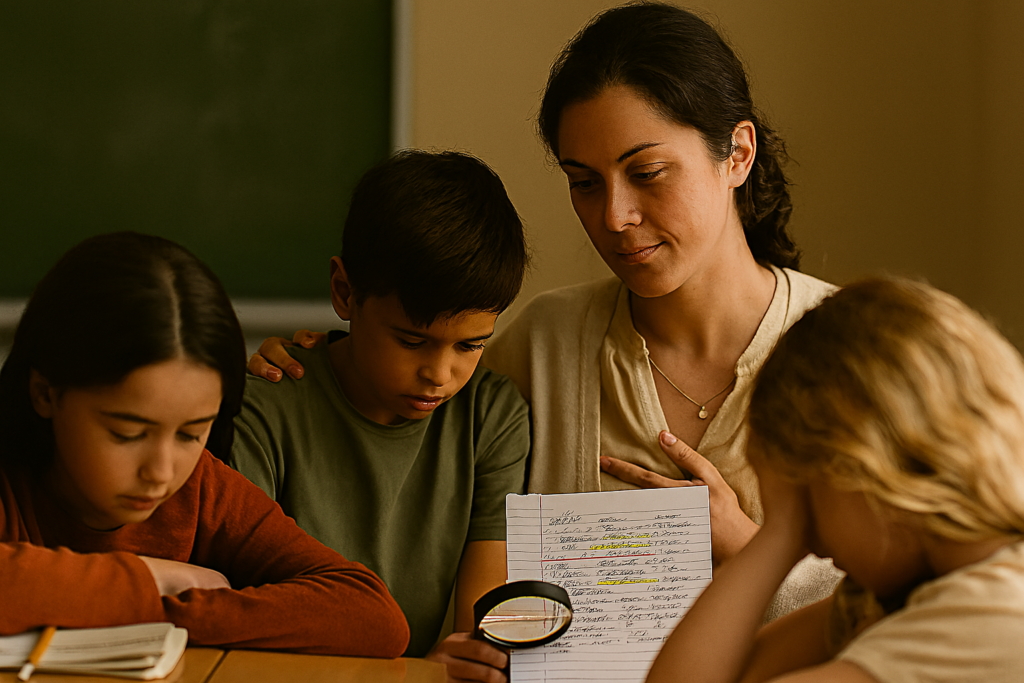
Counsellors, psychologists, and educators carry a responsibility few truly understand.
While the world measures schools by marks, ranks, and performance — we measure well-being in sighs, silences, pauses, tears, shrinking confidence, and unspoken distress.
Every day, we witness struggles no report card will ever show.
We see what most people don’t.
We hear what others miss.
We hold stories no one else knows.
And yet, despite the depth of our work, our voice is often the last one consulted — usually when things have already gone wrong.
The Reality Nobody Talks About
Before a student breaks down, withdraws, lashes out, or gives up — there are always early emotional signs.
But these signs aren’t always verbal.
They appear subtly — in behaviour shifts, body language, reduced participation, and yes, even in handwriting.
As a graphologist working alongside counsellors and educators, I’ve seen emotional breakdowns long before marks change.
And this is where our real power lies: early emotional detection.
A Perspective Many Professionals Haven’t Explored Yet
What if:
the first signs of emotional overload don’t appear in academics or behaviour —
but in the way a student writes?
-
Letters suddenly shrink
-
Pressure turns lighter
-
Baselines dip in the middle
-
Margins expand or disappear
-
Slant moves backwards
These are not handwriting issues.
They are silent emotional alarms — visible sometimes weeks before crisis.
Imagine counsellors having access to this lens — an additional emotional diagnostic tool that gives them a head start before burnout or breakdown.
This isn’t replacing counselling.
It’s strengthening it.
The Real Challenge We All Share
Counsellors and educators are expected to:
-
Raise performance
-
Manage emotional wellness
-
Handle parent expectations
-
Maintain discipline
-
Support special needs
-
And keep students motivated
All at the same time — with limited resources and increasing pressures.
And yet, most conversations around emotional wellbeing still start after damage is visible.
It’s time we shift from reaction to prevention.
Emotional Understanding Is Not Optional — It’s Foundational
Research consistently shows:
Students with strong emotional support perform significantly better and remain more resilient, focused, and motivated.
But this requires:
🟣 Teachers trained to identify emotional signals
🟣 Counsellors empowered with better tools
🟣 School leadership prioritising well-being, not only results
🟣 Collaboration, not siloed responsibility
When counsellors are supported, students thrive.
When emotional literacy becomes part of education, performance follows naturally.
When prevention replaces crisis-response, everyone wins.
A Conversation We Need as Professionals
So instead of discussing only student behaviour, let’s discuss the systems that support the people supporting students — counsellors and educators.
Because:
-
You are not just solving problems — you are protecting futures.
-
You are not the “last stop” — you must be the first.
-
You are not an added service — you are the backbone of healthy schools.
Let’s Talk
🟣 What emotional warning signs do you wish teachers recognised earlier?
🟣 What tools or collaboration would help you create early intervention instead of crisis response?
🟣 Have you ever used handwriting or non-verbal signals to detect emotional distress early?
Your insights matter — they shape real change.
Let’s build a community that learns from each other, supports each other, and raises the standard of care across education.
#meerakii #faridahbharmal #counsellorsofindia #schoolcounsellors #psychologists #educators #studentsupport #emotionalwellbeing #graphology #educationsystem #collaborativelearning